Lensmark

Paintings · sculpture · museum objects

Identify a painting from a photo, and get the artist, the date and the sources behind them.

A building can be found by its address. A painting cannot, because it travels, and the copy in front of you may hang a long way from the original. So Lensmark works from the picture itself and from any label caught in the shot, then tells you who painted it, when, and where the original hangs, with every date linked to the source it came from.

Free while we launch. Every work you look up stays in one conversation you can come back to.

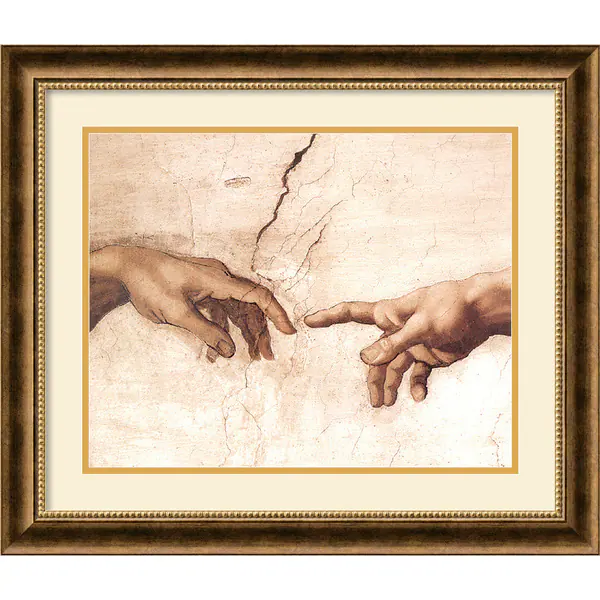
Two hands and nothing else are enough to name the fresco

There is no title in the shot, no signature and nothing on the wall to read. Lensmark can still name the work, tell you where the original hangs, and show you the sources it read to get there.

A framed print in a corridor leads back to a ceiling in Vatican City

You photograph a picture on a wall. The answer names the work and the artist, dates it, and tells you where the original hangs. Every line of it carries the source it came from, so you can open that source and keep reading.

Michelangelo's The Creation of Adam, the detail of the two near-touching hands, in a gilt frame.
Verified

The Creation of Adam

Fresco · Michelangelo · Sistine Chapel ceiling, 1508–1510

A detail from Michelangelo's Creation of Adam. The fresco is on the ceiling of the Sistine Chapel, Vatican City.

museivaticani.va · wikipedia.org

A painting travels, so where you are standing cannot name it

A loan sends a canvas to another country for a year and then brings it home. The version in front of you may be a print in a stairwell. So the answer has to come out of the picture itself, and out of whatever text is in the frame with it.

01

A cropped detail still names the whole work

You rarely photograph a whole work. You photograph the part in front of you, cropped by the frame you are standing at. Two hands from a much larger ceiling can support a match when independent evidence agrees.

When a wall label, a plaque, a signature or an inscription falls inside the shot, the words on it are read straight off the picture and made part of the answer, not skimmed past. When there is nothing to read, as here, the picture carries it alone.

Text found in the photo None No title, no signature, no label

02

Two matching answers are a lead, and a catalogue entry is the confirmation

Anything that recognises a work will hand you a specific name with real confidence, and confident is not the same as right. So Lensmark asks a second time, a different way, and the second answer never sees the first. Even when both land on the same title, two answers can be wrong together, so on their own they get you a likely match to confirm. Before a work is called verified, something of a different kind has to back the name up: a matching entry in a public art catalogue, the words on the label when the label is in the frame, or the same title coming back on its own from an image search. Michelangelo's ceiling has all three. An unsigned canvas in a small collection may have none, and then you get the likely match and the honest reason it stopped there.

First readThe Creation of Adam
Second readThe Creation of Adam
Public art catalogueThe Creation of Adam, Michelangelo
Verified

Two reads agreed, and a public catalogue names the same work.

museivaticani.va

03

A print in a stairwell does not move the fresco

A framed print of this fresco can hang in a hotel corridor, an office or a stairwell. The fresco stays on the Sistine Chapel ceiling in Vatican City. The room you are standing in is a clue to the work, never its address.

The same holds inside a museum. A painting out on loan is still the same painting, and the gallery it usually hangs in is not always the gallery it is in today.

You are herea print, on a wall
So the work lives hereassumed from the room×
Kept separate

The work's own record places it on the Sistine Chapel ceiling, Vatican City. That is what the answer reports.

Photograph it, read the card, then open the source

There is nothing to install and no decision to make first. Lensmark runs in the browser on your phone, it is free at launch, and the camera is the first thing you see.

  1. Photograph the work  as square to the surface as the glass allows. A detail is fine, and you do not need the whole canvas.
  2. Read the card  the title, the artist, the date, where the original hangs, and the history underneath all of it.
  3. Open the source  tap any date or name and you land on the page it came from, in the collection's own words.

Ask a follow-up in the same conversation and the answer comes out of the research already done on that work. Everything you photograph stays in that one thread, in the order you saw it.

An unsigned canvas is still identifiable, and a signature narrows it further

Most paintings people photograph have nothing useful written on them. That is the ordinary case, not the hard one.

A work is named from the picture: the composition, the figures, the setting, the way it is painted and the way it is hung. The Creation of Adam on this page is named from two hands, with no title, no signature and no label anywhere in the frame. An unsigned canvas in a small collection is harder, and when the checks do not line up you get what Lensmark could see and a plain statement that the name is still open.

When there is a signature or a monogram, get it in the shot and get it sharp. Words caught in the frame count: a signature, a date, a stamp, a plaque, the wall label beside the work. An artist's name pulled out of a signature turns a wide search into a narrow one, and the history that follows is about that artist and that studio, not about a style in general.

A print, a poster or a reproduction gets you the same story

The framed print in the hotel corridor is not a failed identification. Lensmark names the work, tells you who painted it and when, and tells you where the original is, which is the answer you wanted when you stopped in the corridor. What it will not do is judge whether the object on the wall is an original or a copy, and it tells you that outright.

In a gallery the practical problem is glass. Reflections take up room in the picture that the painting should be using, so stand square to the surface, get close enough that the work fills the frame, and take a clean crop of one section instead of a wide shot of half the room. Low light is survivable. A hard reflection across the middle of the canvas is the thing that costs you the answer.

A few museums ban gallery photography outright. The Prado in Madrid is one, and says so in its own visitor regulations, so check the rule before you raise the phone. Where photography is allowed, the Louvre works the same way as any other gallery.

A reverse image search hands you a name and stops there

Google Lens and reverse image search are good at the thing they do. They match your photo to other pictures of the same painting and give you a page of thumbnails and links. Working out which of those results is right, and then reading the history out of them, is left to you.

Lensmark does that part. It checks the name against more than one independent source before it commits to it, then writes the history and keeps the source sitting next to each date and name, so the thing you tap is the collection's own entry, not a page of search results. When the sources disagree, you are told which ones disagree and about what.

Lensmark tells you the story and leaves valuation to a specialist

It tells you who painted it, when, what it is made of and what happened to it since, with the source sitting next to each part. What it will not do is price or authenticate anything. That takes a specialist with the object in front of them, and a photograph cannot stand in for one.

What is it worth Is it genuine Original or fake Price estimate

If you came looking for a valuation, an auction house or a qualified appraiser is the right next stop. Lensmark can still tell you what the piece is and who painted it, and show you the record that says so.

The collection that holds the work outranks anyone who has only seen a picture of it

Sources are ranked before a line of the history is written, and for a work the ranking pays off hardest at the top. The catalogue entry from the collection that holds the piece comes ahead of a general encyclopedia, which comes ahead of a site that summarised the encyclopedia.

For The Creation of Adam that puts the Vatican Museums entry on the Sistine Chapel ceiling at the front of the queue, ahead of everything written about it since. You are shown which source each fact came from, so the strongest one is the one you can go and check.

When two sources give different dates or different attributions, you get both of them and who backs each one. An honest gap is more useful than a confident invention.

When the checks disagree, you get what the camera saw and nothing invented

Plenty of objects have never been photographed for a public catalogue, and an unlabelled canvas in a small collection may be one of them. When the checks do not line up, Lensmark tells you what the picture showed and stops there. It does not guess, and it does not dress a guess up as an answer.

Questions people ask before they trust an art ID

What painting is this?

Photograph it and Lensmark names the work and the artist, dates it, and tells you where the original hangs, with the source under each of those.

How do I identify a painting with no signature?

Photograph it and let the picture do the work. Most paintings are named from the image itself, not from anything written on them, so a missing signature is the ordinary case and not a dead end. When the checks do not line up you get a description of what was there and an open name, never an attribution somebody made up.

Can it read an artist's signature or monogram from my photo?

Yes, when it is legible in the shot. A signature, a monogram, a date, a stamp, a plaque or the wall label beside the work are read off the picture and used to narrow the answer. A close, sharp frame of the signature is worth more than a wide shot of the whole wall.

Does it work on a print or a poster, or only on the original?

It works on prints, posters and reproductions. You get the work, the artist, the date and where the original hangs, so a poster in a stairwell leads back to the ceiling in Vatican City. It does not judge whether the object in front of you is an original.

Will it work on a framed painting behind glass?

Usually. Glass reflects, so stand square to it and fill the frame with the painting. One clean crop of a section beats a wide shot with a reflection sitting across the middle of it.

Does it cover sculpture and museum objects too?

Yes. Sculpture, museum objects and architectural detail go through the same checks as a painting, and so do buildings and monuments.

Will it tell me what a painting is worth?

No. It does not price or authenticate anything. It tells you what the work is, who painted it and what happened to it since, and leaves valuation and attribution disputes to a specialist with the object in front of them.

Where do the facts about the artist come from?

From the record, not from recall. The entry written by the collection that holds the work comes first, then historical organisations and official institutions, then the open reference works. Open any date or name and you land in the record itself.

Buildings and monuments are checked the same way

The checks do not change when the subject does. If you came here about buildings, monuments and the plaques in front of them, that side of it is written out on how to identify a landmark from a photo.

Three-dimensional works and objects in cases have their own guide: how a museum object is identified from a photo.

Venue guides put the same checks inside real galleries

One place at a time, from the gallery floor to the street outside.

Louvre artworks

Paintings, sculpture and antiquities, checked against the museum's own catalogue.

British Museum artifacts

Objects in the galleries, with the case label read as part of the evidence.

London landmarks

Churches, statues, monuments and blue plaques, named and researched on the street.

Find out who painted it, and where the original hangs.