Photograph a London landmark, statue or plaque to explore its identity and sourced history.
There is a free tier that needs no payment details. It works on the street, or on the photos already on your phone.
There has been a cathedral on that hill since a consecration in 604, and the one you photograph today is Wren's. The Great Fire destroyed the medieval cathedral in 1666, Christopher Wren was appointed to rebuild in 1668, and the new St Paul's was not declared complete until 1711. The cathedral's own timeline is where those dates come from.
The Monument, the fluted column near London Bridge, marks the same fire. Robert Hooke and Christopher Wren worked out the final design together, construction began in 1671, and it opened in 1677, according to the Monument's own history pages.
Then there is St Ethelburga's on Bishopsgate, a medieval church you would walk straight past between the office towers. It was first recorded in 1250, it is one of the few City churches the Great Fire never took, and on 24 April 1993 an IRA bomb went off in a truck parked directly outside it. The Centre for Reconciliation and Peace that now occupies the rebuilt church began its work in 2002. All of that is on St Ethelburga's own site, and none of it is on the building.
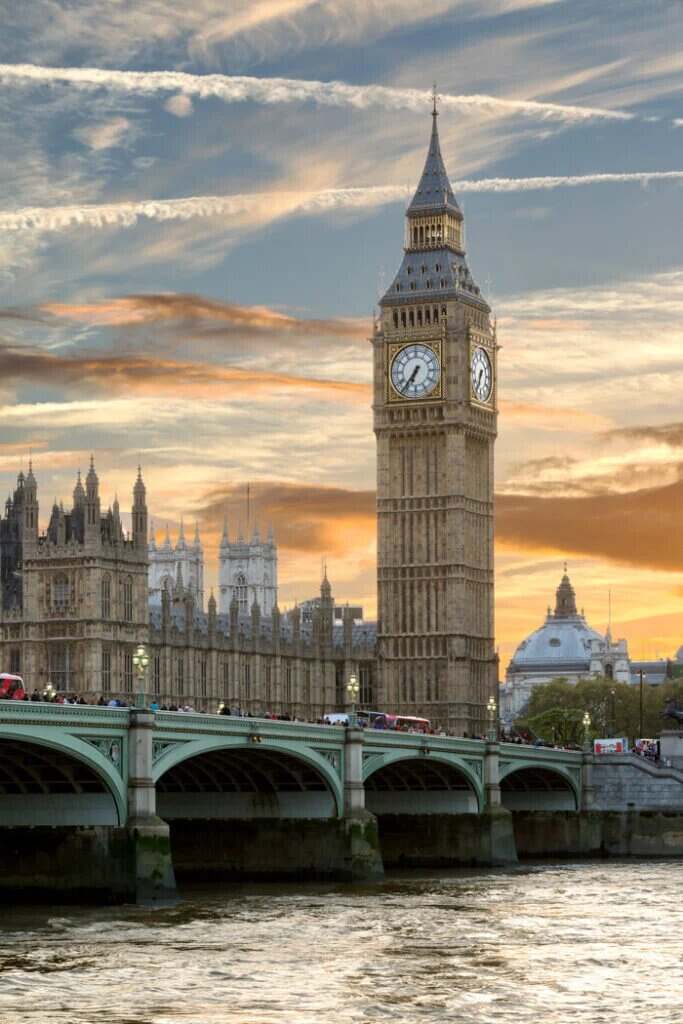
A city is the hard case for photo identification, and the case this was built around: your photo gets two independent reads, and a name only comes back when they agree or a public record of the place backs one of them up.
A blue plaque, a foundation stone, a carved name over a doorway: words caught in your shot are read off the picture and help settle the name. A legible plaque is often what separates two near-identical houses, so get close enough that the text is sharp.
If your photo carries where it was taken, that cuts a city of thousands of buildings down to the handful on that corner. Without it, the picture carries the answer alone. A shot from across the river gives both reads less to work with than one from the pavement opposite, and an unsure answer says so honestly rather than hiding it.
A famous cathedral has centuries written about it. A back-street chapel may have one dated plaque and nothing else, and the card says so rather than filling the space.
Sometimes the name is all you wanted. This page is for the building whose name is not enough, and for what happened there after the name.
In London, the Metropolitan Police says members of the public do not need a permit to photograph or film in public places.
Lensmark is independent. It is not affiliated with or endorsed by any of the institutions named on this page.
The same checks work indoors, and the case label becomes part of the evidence. That side of it is written out on identifying British Museum artifacts from a photo.
No routes, no walking tours, no tickets, no opening hours and no restaurant near the Monument. Ask for one of those and it says so, then goes back to the building in front of you.