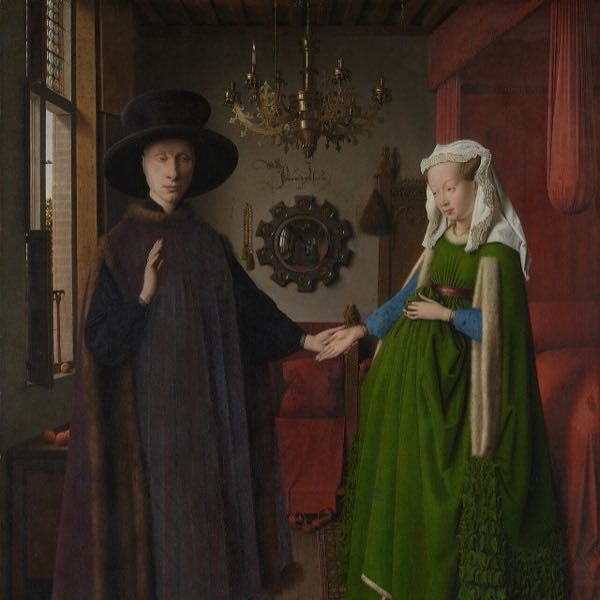
The room's objects proclaim a couple's wealth and status.
Read more
Illustrative photo demo
Illustrative collection
Your walks
Today
The Arnolfini PortraitJan van Eyck11:26 AM
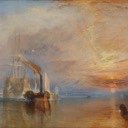
The Fighting TemeraireJoseph Mallord William Turner9:41 AM3
Last week
Pont Alexandre IIIParis, France7:14 PM
Hintze HallLondon, England6:05 PM
Last month
Elizabeth TowerLondon, England4:30 PM
Arc de TriompheParis, France2:12 PM2
Take a permitted photoUse a photo allowed by the museum's current rules.
Read the sourced historyWhen Lensmark can verify the work, it explains what the sources support and links to them. When it cannot, it says so plainly.
Ask a follow-upContinue with a question about the work's maker, age or significance.
Your National Gallery walk saves itself.Just take pictures. Each work is kept with its sourced history, grouped by day.
Images in the demo: The Arnolfini Portrait: Jan van Eyck, Source credit: Web site of National Gallery, London, Public domain, via Wikimedia Commons. Licence; source file. The Fighting Temeraire: J. M. W. Turner, Source credit: http://www.nationalgallery.org.uk/paintings/joseph-mallord-william-turner-the-fighting-temeraire, Public domain, via Wikimedia Commons. Licence; source file. Images cropped to square. The remaining walk illustrations are standard Lensmark examples.
What the National Gallery collection covers
The National Gallery holds the national collection of paintings in the Western European tradition from the thirteenth to the nineteenth centuries. Its Trafalgar Square collection connects the art of late medieval and Renaissance Italy with Dutch and Flemish painting and the French Impressionists. About the collection
The Gallery opened in 1824 with 38 paintings bought from John Julius Angerstein's collection, first housed at Pall Mall. Its paintings invite close looking at how artists make meaning: a mirror in Van Eyck's portrait, a steam tug in Turner's seascape and flowers at different stages of life in Van Gogh's still life.
Its collection strengths include Western European painting from the thirteenth to nineteenth centuries, Italian Renaissance painting, Dutch and Flemish painting, and French Impressionism.
The Arnolfini Portrait
Jan van Eyck
Date
1434
The room's objects proclaim a couple's wealth and status. Painted in 1434, the portrait places a convex mirror behind them, reflecting two visitors beneath Van Eyck's signature; the sitters' precise identities remain uncertain.
A steam tug pulls the veteran warship towards the yard where it will be broken up. Turner painted the scene in 1839, interpreting the ship's final journey of 1838 as the age of sail gave way to steam.
Van Gogh painted sunflowers to decorate his Arles home before Gauguin's visit. The National Gallery's 1888 version, inventory NG3863, shows flowers at different stages of life, linking its colour and energy with the passing of time.
These are collection records, not confirmation that the works are on display today.
Check the photography rules first
The National Gallery permits personal, non-commercial photography and filming, subject to exhibition labels and loan restrictions. Do not use flash, additional lighting, tripods, selfie sticks or gimbals, or photograph, record or stream tours. Respect copyright, keep views clear and obtain permission before photographing anyone, including staff; children and young people require their accompanying adult's consent. Commercial photography and filming need prior written permission. Read its current visitor conditions and follow gallery signs before taking a photo. National Gallery photography policy
Lensmark needs a connection to answer, so check your signal or any visitor Wi-Fi before you photograph a work.
Lensmark can explain National Gallery works. Let us be your AI tour guide today.