
Why do independent reads have to agree?
The same rules apply here as everywhere else: two separate readings of your photo have to line up before a name comes back, and nothing here gets named on a single guess.
Photograph a British Museum object to explore its identity and history with supporting sources; Lensmark is an independent app.
There is a free tier that needs no payment details. It works in the gallery, or on photos from a visit years ago.
The Rosetta Stone in Room 4 carries one decree carved three times over, in hieroglyphs, in Demotic and in Greek, and that repetition is what let scholars finally read ancient Egyptian. French soldiers found it by accident near Rashid in 1799, built into an old wall.
The museum tells that story on its own Rosetta Stone page.
The Sutton Hoo helmet belonged to someone buried in the early seventh century inside a 27-metre ship, under a Suffolk mound that Basil Brown excavated in 1939.
The museum's account of the Anglo-Saxon ship burial at Sutton Hoo is the source under that date.
The Lewis Chessmen were carved mostly from walrus ivory around 1150 to 1200 and found on the Isle of Lewis, and even the museum's own telling can only say they surfaced some time before April 1831. An honest answer keeps that gap open instead of inventing a tidy discovery story.
The museum's own telling of the chessmen is the source under that gap.
If a piece has moved since your visit, the identification still holds: it names the object in your photo, not the room it was standing in, and its sources are about the object itself.
The same rules apply here as everywhere else: two separate readings of your photo have to line up before a name comes back, and nothing here gets named on a single guess.
A label, a gallery sign or a catalogue number caught in your shot is read off the picture and goes into naming the piece. In a room of similar pieces, that is often the deciding clue.
Sources are ranked with museums and collections first, so for an object here the museum's own pages are the ones the answer reaches for before anything written about them second-hand.
When the checks will not agree, Lensmark describes what is in the frame and leaves the name open, instead of dressing a guess up as a fact. The collection runs to millions of objects and many have never been photographed for a public record.
The museum permits hand-held photography for private use in most galleries, with signs marking where it is restricted; the rules are on the British Museum's visit page.
Lensmark is independent. It is not affiliated with or endorsed by the British Museum.
The museum's own audio guide is its own scholarship, curated room by room, and for the rooms it covers there is no substitute. Google Lens is faster, already on your phone, and for the famous pieces the name is all you wanted. Lensmark is for the object in between: the one with no audio stop and no famous name, where you want the story checked against more than one source and handed to you with those sources attached.
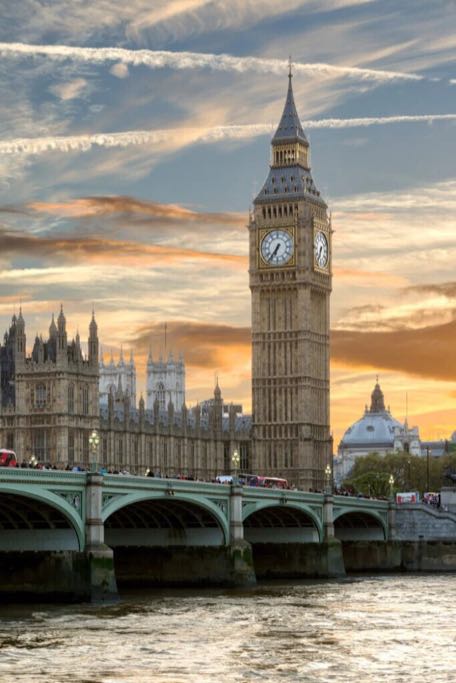
The same checks work on the street, on the spires, statues and blue plaques between here and the river. That side of it is written out on identifying London landmarks from a photo.
Lensmark books nothing and plans nothing. It stays with the object in the case: what it is, how old it is, how it got here, and which sources say so.