Take a permitted photoUse a photo allowed by the museum's current rules.
Read the sourced historyWhen Lensmark can verify the work, it explains what the sources support and links to them. When it cannot, it says so plainly.
Ask a follow-upContinue with a question about the work's maker, age or significance.
Your Design Museum walk saves itself.Just take pictures. Each work is kept with its sourced history, grouped by day.
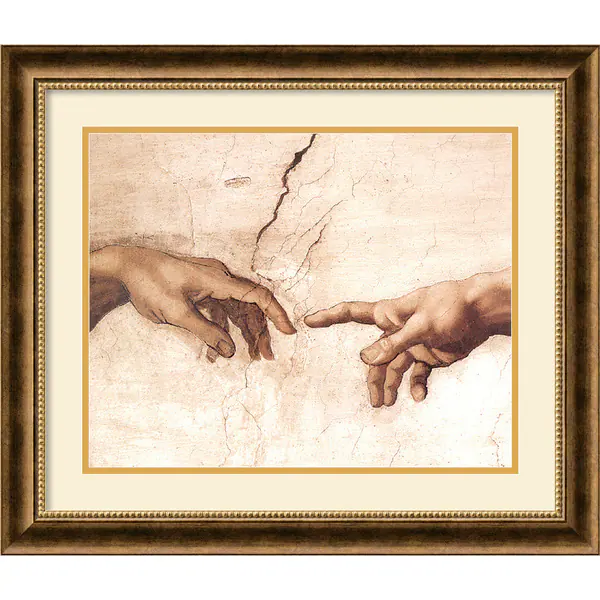
The demo uses the class illustration of Michelangelo's The Creation of Adam, with landmark photographs in the illustrative collection. These images do not depict Design Museum works.
What the Design Museum collection covers
Founded by Sir Terence Conran in 1989, the Design Museum explores the objects people use, read, wear and travel in. Its collection follows mass production from nineteenth-century manufacturing to digital design, with drawings, prototypes and finished products showing how an idea becomes something people can use. Collection
The collection began with the Boilerhouse Project at the V&A between 1982 and 1986, before the museum opened under its own name. At its Kensington home, Designer Maker User approaches modern design through the people who conceive objects, the processes that manufacture them and the people who use them, with examples ranging from British road signs to the Valentine typewriter and the Phonosuper SK5 record player.
Its collection strengths include modern and contemporary product design, graphic and communication design, and fashion and transport design.
British road signage
Jock Kinneir and Margaret Calvert
Date
1965
Familiar road signs reveal a history of graphic design in public space. Kinneir and Calvert's system launched on 1 January 1965, coordinating lettering, colours, shapes and symbols so drivers could read the road.
A typewriter turns a familiar writing tool into a question about design. The museum credits Sottsass and King for the Valentine and describes its red case as lightweight and portable in its 1969 design.
A domestic record player opens a window into product-design history. The museum's exhibition record dates this Braun A.G. design to 1956 and credits Hans Gugelot and Dieter Rams.
These are collection records, not confirmation that the works are on display today.
Check the photography rules first
The Design Museum permits photography and filming on personal devices without flash, tripods or selfie sticks; keep other visitors out of the shot, obey no-photography signs and staff guidance, and obtain prior permission for commercial photography or filming. Read its current visitor conditions and follow gallery signs before taking a photo. Design Museum photography policy
Lensmark needs a connection to answer, so check your signal or any visitor Wi-Fi before you photograph a work.
Lensmark can explain Design Museum works. Let us be your AI tour guide today.