

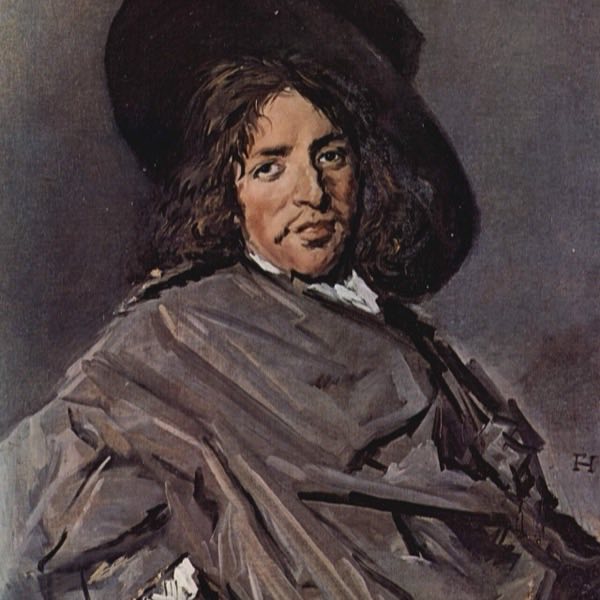
Portrait of an unknown man
Frans Hals painted this portrait of a man whose name remains unknown. The museum records it as accession 150, an oil painting on canvas given by Joseph Prior in 1879.
Read the museum recordPhotograph a work in the Fitzwilliam Museum and Lensmark tells you who made it, when, and why it matters, with every fact linked to its source.
Your tour guide, today
Fitzwilliam Museum
Cambridge, United Kingdom
Lensmark is independent and is not affiliated with or endorsed by Fitzwilliam Museum.
PrivacyIllustrative photo demo
Illustrative collection
Images in the demo: Portrait of an unknown man, Frans Hals, circa 1660 - 1663; Les Peupliers, Claude Monet, 1891; The Last of England, Ford Madox Brown, 1860. All three are Fitzwilliam Museum works reproduced from public-domain files on Wikimedia Commons.
The Fitzwilliam Museum began with Richard Fitzwilliam's 1816 bequest of art, objects, books and manuscripts to the University of Cambridge. Its permanent building on Trumpington Street opened to the public in 1848. History
The collection brings paintings and antiquities together with prints, manuscripts and decorative arts, including works by Frans Hals, Claude Monet and Ford Madox Brown. The museum warns that its online collection records have not been updated since April 2026, so recorded locations do not confirm what is on view today.
Its collection strengths include European paintings, prints and drawings, Egyptian, Greek, Roman and Near Eastern antiquities, and applied and decorative arts.
Frans Hals painted this portrait of a man whose name remains unknown. The museum records it as accession 150, an oil painting on canvas given by Joseph Prior in 1879.
Read the museum recordMonet's Les Peupliers takes its title from the poplar trees in the landscape. The museum dates this oil painting to 1891 and records Stanley William Sykes's 1966 bequest under accession PD.9-1966.
Read the museum recordFord Madox Brown painted this version of The Last of England in 1860. The museum bought the oil painting in 1917 through the Marlay Fund and records it as accession M.Add.3.
Read the museum recordThese are collection records, not confirmation that the works are on display today.
The Fitzwilliam Museum permits personal, non-commercial photos and short videos with small cameras or handheld devices, with no flash, tripods, monopods, selfie sticks, additional lighting or long-focus and telephoto lenses, no obstructing or inconveniencing others, no photographing people without consent or putting objects at risk, no photography where signs prohibit it or in retail areas, and responsibility for copyright and publication restrictions remaining with the visitor; commercial or professional photography and longer filming require advance permission, while wedding shoots require an appointment at least 14 days ahead, outside public opening hours, with a location charge. Read its current visitor conditions and follow gallery signs before taking a photo. Fitzwilliam Museum photography policy
Lensmark needs a connection to answer, so check your signal or any visitor Wi-Fi before you photograph a work.