

Después de la Batalla de Curupaytí
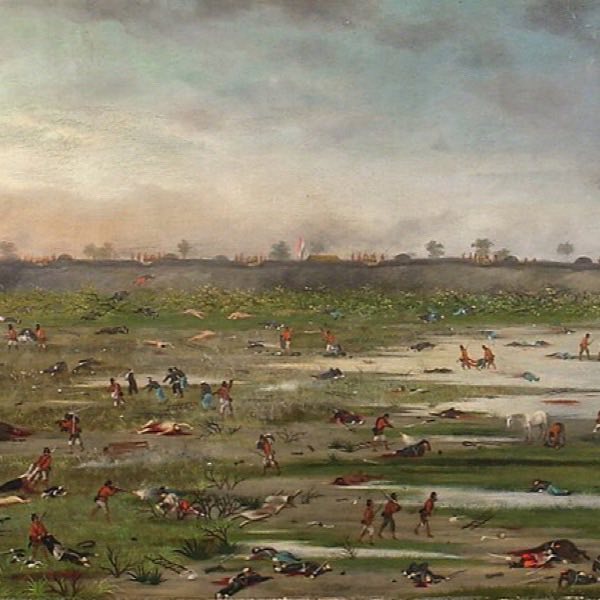
López painted the devastation left after the battle of Curupaytí. The canvas belongs to his wider account of the Paraguayan War, in which he fought.
Read the museum recordPhotograph a work in the Museo Nacional de Bellas Artes and Lensmark tells you who made it, when, and why it matters, with every fact linked to its source.
Your tour guide, today
Museo Nacional de Bellas Artes
Buenos Aires, Argentina
Lensmark is independent and is not affiliated with or endorsed by Museo Nacional de Bellas Artes.
PrivacyIllustrative photo demo
Illustrative collection
Images in the demo: Después de la Batalla de Curupaytí, Cándido López, 1893; Sin pan y sin trabajo, Ernesto de la Cárcova, 1894. Both are Museo Nacional de Bellas Artes works reproduced from public-domain files on Wikimedia Commons.
The Museo Nacional de Bellas Artes brings Argentine and European art together in Buenos Aires. Its collection includes paintings by Cándido López, Ernesto de la Cárcova and El Greco. Collection
Paintings, sculpture, prints, drawings and photography offer different ways into the collection. López's scenes of war and De la Cárcova's social criticism sit within its broad account of Argentine art, alongside European works and international twentieth-century art.
Its collection strengths include Argentine art, European art from the twelfth through nineteenth centuries, and international twentieth-century art.
López painted the devastation left after the battle of Curupaytí. The canvas belongs to his wider account of the Paraguayan War, in which he fought.
Read the museum recordDe la Cárcova made working-class hardship a subject of social criticism. He began the painting in Italy and completed it after returning to Buenos Aires.
Read the museum recordEl Greco places the praying Christ above his sleeping disciples. This vertical version uses abrupt changes of scale and light to heighten the scene's drama.
Read the museum recordThese are collection records, not confirmation that the works are on display today.
Security staff may refuse equipment they consider hazardous, including tripods and extendable phone or camera arms; filming and content creation must not disrupt circulation, security or quiet in the galleries. Promotional, commercial or professional content for social media requires authorization requested at least one week ahead. The museum may set filming times, restrict movement, require an institutional escort or refuse requests that affect conservation, safety or normal operations. Read its current visitor conditions and follow gallery signs before taking a photo. Museo Nacional de Bellas Artes photography policy
Lensmark needs a connection to answer, so check your signal or any visitor Wi-Fi before you photograph a work.