Take a permitted photoUse a photo allowed by the museum's current rules.
Read the sourced historyWhen Lensmark can verify the work, it explains what the sources support and links to them. When it cannot, it says so plainly.
Ask a follow-upContinue with a question about the work's maker, age or significance.
Your Te Papa walk saves itself.Just take pictures. Each work is kept with its sourced history, grouped by day.
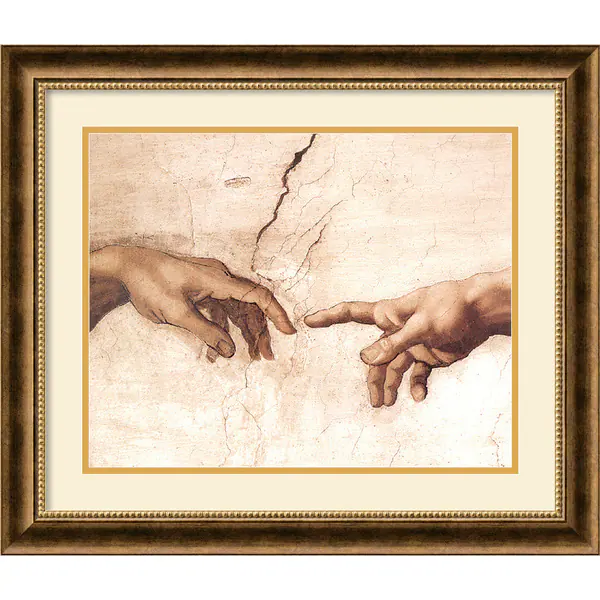
The illustrative demo shows Michelangelo's The Creation of Adam in Vatican City. The demo and collection images illustrate Lensmark and are not Te Papa collection works.
What the Te Papa collection covers
The Museum of New Zealand Te Papa Tongarewa was established under the 1992 Act that united the National Museum and National Art Gallery. Its Cable Street building in Wellington opened on 14 February 1998. History
Te Papa brings New Zealand art together with taonga Māori, Pacific cultures, photography and natural history. Its art holdings include painting, sculpture, prints, drawings, decorative arts and textiles.
Its collection strengths include New Zealand art, Taonga Māori, Pacific cultures, and Photography.
Northland panels
Colin McCahon
Date
1958
McCahon painted Northland panels in Auckland in 1958. Made with house paint on canvas, the work entered the collection in 1978 with Ellen Eames Collection funds and assistance from the New Zealand Lottery Board.
Rita Angus made this Canterbury landscape in 1936 using watercolour and black chalk. Purchased in 1977 with Mary Buick Bequest funds, this work on paper is distinct from her oil painting Cass in Christchurch.
McCahon gave numerals the spiral forms of the koru in this 1965 painting. Te Papa connects the three-part work with the Christian Trinity and records its purchase in 2011.
These are collection records, not confirmation that the works are on display today.
Check the photography rules first
Te Papa permits personal, non-commercial photos and video without flash, subject to object and exhibition signs; Te Hau ki Tūranga cannot be photographed, and people require their permission. Its code prohibits setting up tripods or camera extension poles, while its photography section permits selfie sticks and requires permission for tripods, monopods and lighting; ask staff before using equipment. Commercial use requires permission. Read its current visitor conditions and follow gallery signs before taking a photo. Te Papa photography policy
Lensmark needs a connection to answer, so check your signal or any visitor Wi-Fi before you photograph a work.
Lensmark can explain Te Papa works. Let us be your AI tour guide today.