

Human-faced fish-pattern painted pottery basin
Human faces and fish meet in the basin's painted inner wall. The museum discusses possible ritual and totemic meanings, leaving the imagery open to interpretation.
Read the museum recordPhotograph a work in the National Museum of China and Lensmark tells you who made it, when, and why it matters, with every fact linked to its source.
Your tour guide, today
National Museum of China
Beijing, China
Lensmark is independent and is not affiliated with or endorsed by National Museum of China.
PrivacyIllustrative photo demo
Illustrative collection
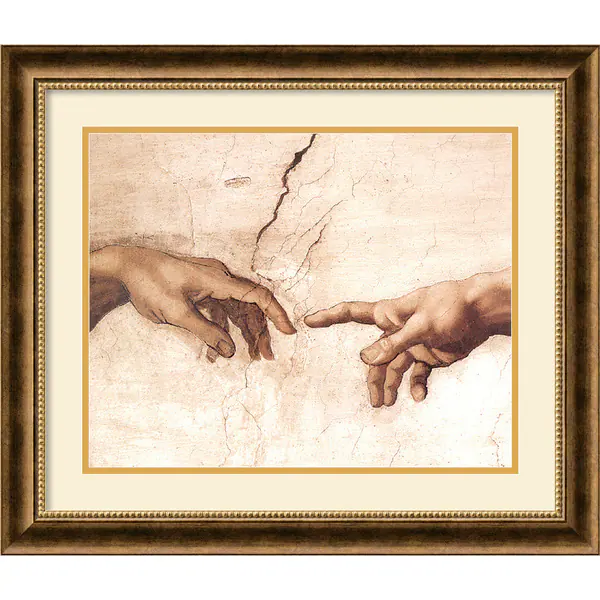
The demo uses Lensmark's class illustration, The Creation of Adam by Michelangelo, and six landmark examples. These images are not National Museum of China works.
The National Museum of China brings Chinese archaeology, art and modern history together on the east side of Tiananmen Square in Beijing. Its holdings include ancient pottery, bronze vessels and painting. About the museum
The museum was formed in 2003 through a merger of two predecessor museums. Its collection records connect the painted motifs of Yangshao pottery with the casting and decoration of Shang bronze vessels.
Its collection strengths include Ancient Chinese archaeology, Chinese bronze, Chinese painting, and Modern Chinese history.
Human faces and fish meet in the basin's painted inner wall. The museum discusses possible ritual and totemic meanings, leaving the imagery open to interpretation.
Read the museum recordFour curled-horn goats form the corners of this bronze vessel. The museum describes how sculpture and relief combine the animals with the vessel's body.
Read the museum recordThe ding records a royal mother's temple name in its inscription. Its body and four legs were cast together, with the handles cast afterward.
Read the museum recordThese are collection records, not confirmation that the works are on display today.
The National Museum of China welcomes collection-exhibition photos without flash, selfie sticks or tripods while protecting people and exhibits; temporary exhibitions may prohibit photos, commercial filming and self-media broadcasts or recordings need approval, working reporters must follow press procedures, and its equipment rules bar commercial camera rigs, aerial devices and selfie sticks extended beyond 1.3 metres. Read its current visitor conditions and follow gallery signs before taking a photo. National Museum of China photography policy
Lensmark needs a connection to answer, so check your signal or any visitor Wi-Fi before you photograph a work.