


Annunciation
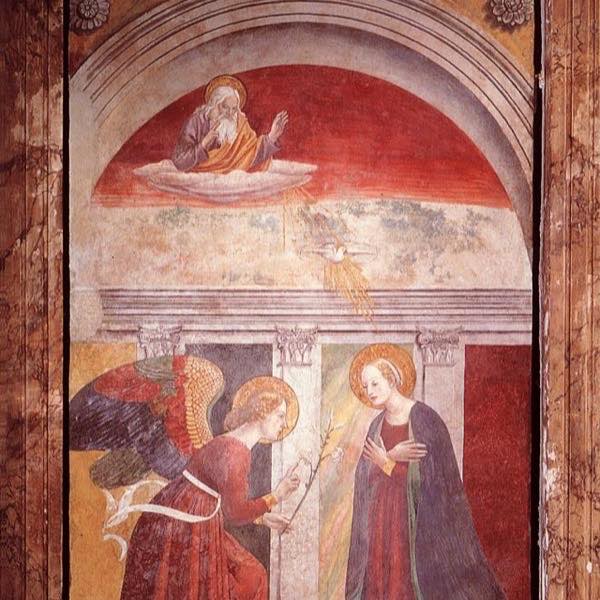
Melozzo da Forlì painted this fresco of the Annunciation. It is among the Christian artworks inside the Pantheon, which remains a consecrated church.
Photograph a work in the Pantheon and Lensmark tells you who made it, when, and why it matters, with every fact linked to its source.
Your tour guide, today
Pantheon
Rome, Italy
Lensmark is independent and is not affiliated with or endorsed by Pantheon.
PrivacyIllustrative photo demo
Illustrative collection
Image in the demo: Annunciation, Melozzo da Forlì, Pantheon. Public-domain reproduction from the Web Gallery of Art via Wikimedia Commons, cropped for these displays. Public Domain Mark.
Hadrian rebuilt the Pantheon between 118 and 125 CE. The Roman monument became the church of Santa Maria ad Martyres in the seventh century. History
Inside, Christian paintings and tomb monuments share the ancient building. They include Melozzo da Forlì's Annunciation, Raphael's tomb and the tomb of Victor Emmanuel II.
Its collection strengths include ancient Roman architecture and material culture, Renaissance devotional painting, and monumental funerary sculpture.
Melozzo da Forlì painted this fresco of the Annunciation. It is among the Christian artworks inside the Pantheon, which remains a consecrated church.
Raphael's tomb lies beneath Lorenzetto's Madonna del Sasso. Pietro Bembo wrote the Latin epitaph that honours the painter.
Manfredo Manfredi designed this tomb for Victor Emmanuel II. The Pantheon also holds the remains of Umberto I and Queen Margherita.
These are collection records, not confirmation that the works are on display today.
The Pantheon's visitor rules allow mobile phones for photographs and video; professional photography requires prior authorization, and this general permission does not cover tripods or professional equipment. Read its current visitor conditions and follow gallery signs before taking a photo. Pantheon photography policy
Lensmark needs a connection to answer, so check your signal or any visitor Wi-Fi before you photograph a work.