





Pine Forest
Tōhaku used ink to evoke pine trees in mist. The museum describes rough brushwork and delicate gradations in this painting on paper, recorded as A-10471.
Read the museum recordPhotograph a work in Tokyo National Museum and Lensmark tells you who made it, when, and why it matters, with every fact linked to its source.
Your tour guide, today
Tokyo National Museum
Tokyo, Japan
Lensmark is independent and is not affiliated with or endorsed by Tokyo National Museum.
PrivacyIllustrative photo demo
Illustrative collection
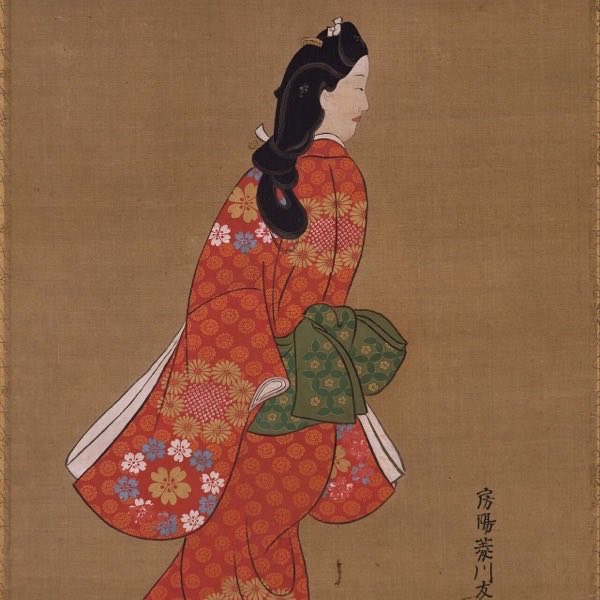
The demo shows Beauty Looking Back, Hishikawa Moronobu, Edo period, 17th century. Hishikawa Moronobu, Source credit: gQFgWTeF6qSwkg at Google Cultural Institute maximum zoom level, Public domain, via Wikimedia Commons. Source image · Public domain. Image cropped to square. The other collection images illustrate Lensmark beyond the museum.
Tokyo National Museum began with an exposition at Tokyo's Yushima Seido Confucian shrine in 1872. Its collections bring together art, historical documents and archaeological objects from Japan and other parts of Asia. Museum FAQ
This page covers the museum's Ueno campus. Its Japanese and Asian collections include painting, sculpture, textiles, decorative arts and historical materials.
Its collection strengths include Japanese art and archaeology, Asian art, Buddhist sculpture and painting, and decorative arts and historical materials.
Tōhaku used ink to evoke pine trees in mist. The museum describes rough brushwork and delicate gradations in this painting on paper, recorded as A-10471.
Read the museum recordMoronobu painted Beauty Looking Back in color on silk. The museum dates it to the seventeenth-century Edo period and records it as A-60.
Read the museum recordThis painting shows Kannon surrounded by guardian deities. Made in color on silk with robes patterned in gold leaf, the twelfth-century work is recorded as A-11796, a gift of Tanaka Shinbi.
Read the museum recordThese are collection records, not confirmation that the works are on display today.
Tokyo National Museum permits personal photography in its Collection Exhibitions except no-photo objects, including restricted loans or deposits; special-exhibition galleries and the Heiseikan's second floor prohibit photography, flash and additional lighting are forbidden, tripods, monopods and selfie sticks are forbidden, visitors must not be disturbed, and photographs must not be duplicated, distributed or used commercially. Read its current visitor conditions and follow gallery signs before taking a photo. Tokyo National Museum photography policy
Lensmark needs a connection to answer, so check your signal or any visitor Wi-Fi before you photograph a work.